
Deconstructing the Coast: Seeing San Diego’s Landscapes Through Abstraction
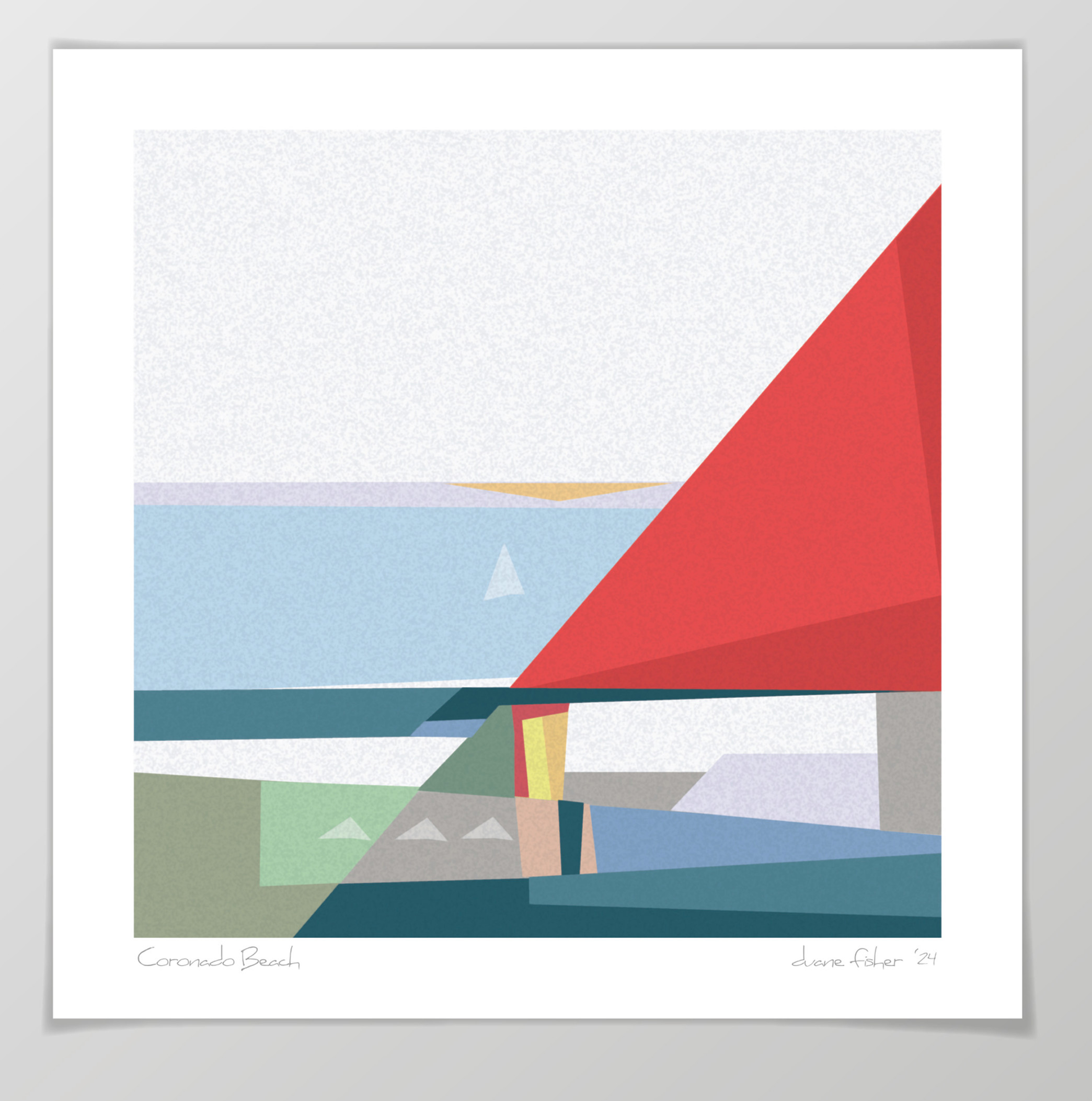
When we look at a familiar coastline, our eyes instinctively register details: crashing waves, historic architecture, umbrellas on the sand, and people moving along the shore. But beneath those fine details lies a deeper structure built on geometry, color, and light.
Across my abstract San Diego beach series, my goal isn't to reproduce a photo-realistic scene, but to deconstruct the coastal environment into its fundamental essence by letting bold shapes and intentional color palettes evoke the feeling of being there.
The Art of Stripping Away Detail
Coronado Beach is just one snapshot of this ongoing process and one of my favorite places. Abstracting a landscape is an exercise in distillation. By removing intricate surface details, the focus shifts to balance, spatial harmony, and mood. The landscape becomes a language of geometric relationships:
Architectural Anchors: Distinct local landmarks, like the sharp roofline of the Hotel del Coronado, can be translated into pure, arresting forms and patterns that immediately ground the composition while remaining modern and minimalist.
Planes of Horizon: Soft, horizontal bands of soft lavender, deep teal, and sky blue evoke the expanse where sea meets sky, capturing light and depth with simple, overlapping shapes.
The Energy of the Shore: Earthy tones can represent the lush lawns bordering the sand, while pops of warm yellow, turquoise, and coral quietly hint at poolside cabanas or scattered towels, and the vibrant hum of life along the water.

A Broader Palette of Place
Whether capturing the dramatic cliffs of Torrey Pines, the wide horizons of Pacific Beach, a seaside amusement park, or the distinct coastal light unique to Southern California, each piece in the series applies this same philosophy: taking iconic local scenery and translating it into a structured, architectural dialogue between shape and color.
By reinterpreting these familiar places through geometry, the artwork creates space for the viewer to bring their own memories to the canvas. You aren't just looking at a specific spot on a map—you’re recognizing its rhythm.


Comments